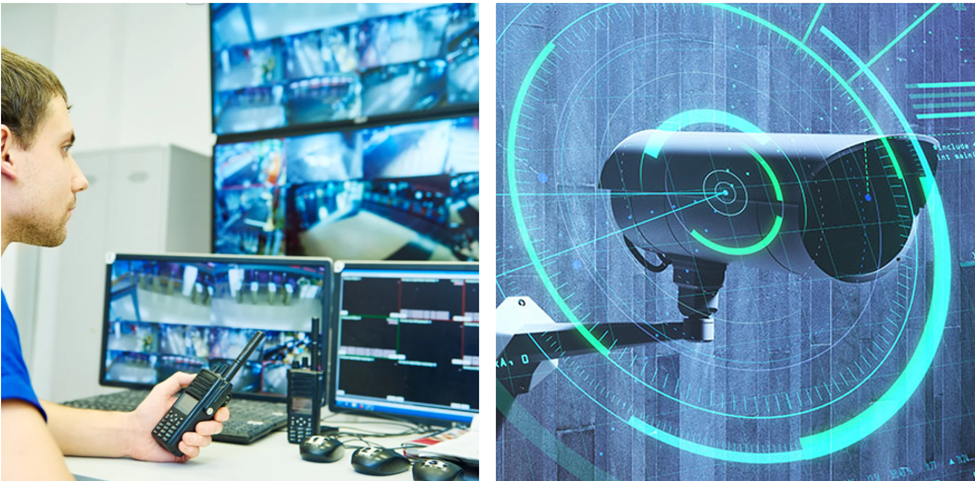
Security systems have become more than just tools for protection they are intelligent networks capable of driving insights and decision-making. Traditional surveillance once relied on human operators who had to watch hours of footage to identify threats. Today, that paradigm is shifting. The convergence of artificial intelligence, machine learning, and edge computing has made modern video surveillance monitoring systems far more proactive, adaptive, and insightful than ever before.
From Passive Watching to Proactive Detection
The earliest CCTV systems were reactive by design. They recorded footage, but unless an incident occurred, that data was rarely analyzed or acted upon. Even when events did happen, security teams faced the arduous task of sifting through recordings, often after the damage was done. This reactive approach created a time lag between incident occurrence and response, reducing the effectiveness of surveillance.
Modern security is no longer about watching screens it is about anticipating, detecting, and responding in real time. Cameras are now embedded with smart sensors and connected to systems capable of recognizing unusual activities, flagging anomalies, and alerting security personnel before a situation escalates. This evolution marks the shift from simple observation to proactive intervention.
The Role of Artificial Intelligence in Surveillance
Artificial intelligence has redefined the boundaries of what surveillance can achieve. Instead of relying solely on human vigilance, AI systems can analyze video feeds continuously, learning patterns of behavior and identifying anomalies that may indicate security risks. AI models trained on vast datasets are now capable of recognizing not just motion, but also context: Is a person loitering suspiciously? Is a vehicle parked where it shouldn’t be? Is there an object left unattended in a crowded space?
This ability to detect context transforms surveillance from a one-dimensional monitoring tool into a decision-support system. Security teams can prioritize high-risk alerts, reduce false alarms, and focus their attention where it matters most. In critical environments such as airports, data centers, or government facilities, this capability is invaluable.
Real-Time Intelligence at the Edge
One of the most significant advancements in surveillance technology is the rise of edge computing. Instead of sending all data to centralized servers for processing, many surveillance systems now process information locally at the edge closer to where the data is generated.
For example, an edge-enabled camera can instantly detect if a restricted door is opened by an unauthorized individual and trigger an alert. In high-security zones, even a delay of a few seconds can be the difference between prevention and escalation. Beyond security, this architecture also optimizes bandwidth usage and lowers storage costs, since only relevant data needs to be transmitted or archived.
Beyond Security: Expanding Use Cases
Surveillance technology has applications far beyond safety and crime prevention. Retail businesses use it to analyze customer behavior, track footfall, and optimize store layouts. Urban planners deploy it to monitor traffic flow, reduce congestion, and improve pedestrian safety. In manufacturing, surveillance supports workplace safety by ensuring compliance with safety protocols and detecting hazardous situations.
The transition from pure monitoring to multi-dimensional intelligence has broadened the value of these systems across industries. Surveillance footage is no longer discarded after a few days; it is harnessed as a valuable dataset for operational improvements and strategic decision-making.
Addressing Privacy and Ethical Considerations
As with any transformative technology, the widespread adoption of advanced surveillance raises important questions about privacy and ethics. The ability to track movement, analyze behavior, and store large volumes of data must be balanced with the right to individual privacy. Regulations such as data protection laws and guidelines for responsible AI use are being established worldwide to ensure that surveillance does not become intrusive or discriminatory.
Transparency, accountability, and clear governance frameworks will be critical to building public trust. Organizations implementing AI-driven surveillance must adopt strong policies around data storage, consent, and access control. Without these safeguards, even the most advanced technologies risk facing resistance and backlash.
The Human-Machine Partnership
While AI and automation have enhanced surveillance, the human role remains central. Technology can filter noise, detect anomalies, and highlight risks, but humans bring contextual understanding, empathy, and decision-making capabilities that machines cannot replicate.
Consider a scenario where an AI system flags an individual loitering outside a building. A human operator can interpret whether the individual is a potential threat, a delivery driver waiting for access, or simply someone seeking shelter from the rain. The most effective surveillance frameworks are therefore hybrid in nature—machines handle scale and speed, while humans provide judgment and nuance.
Building Resilient, Future-Ready Surveillance Systems
Looking ahead, surveillance systems will become even more sophisticated. Integration with other technologies—such as biometrics, drones, and the Internet of Things will create interconnected ecosystems capable of monitoring vast environments seamlessly. Predictive analytics will allow organizations to anticipate threats before they occur, while adaptive learning systems will continuously refine their accuracy.
For enterprises and governments alike, investing in future-ready surveillance is not just about safeguarding assets, but also about building resilience in a world of increasing complexity and interconnected risks.
Conclusion
The security landscape has evolved from static observation to dynamic, intelligent monitoring. With technologies like video surveillance monitoring and ai powered video analytics, organizations now have the tools to detect threats in real time, reduce false positives, and optimize resources. Yet, the true power of these systems lies in their ability to augment human judgment, creating a balanced framework where machines and people work hand in hand.
As societies become smarter and more connected, the future of surveillance will not only be about preventing harm but also about enabling efficiency, safety, and trust in our shared spaces.
